Remote sensing & monitoring systems

Reliable data from places without power, network or access.

GeoInspect designs, builds and deploys sensing systems for sites beyond conventional infrastructure — on the ground with our own ultra-low-power sensor nodes, and from the air with drone-borne sensors, LiDAR and imaging.

From sensor to decision

01

Sensor

Measure what matters, where it happens

02

Edge

Process on the node, send only what counts

03

Connectivity

Cellular, long-range radio, satellite fallback

04

Data

Secure telemetry pipeline and storage

05

Insight

Dashboards, alerts and GIS-ready datasets

Technology · Harvestcore

Harvestcore: our own sensor framework.

Off-the-shelf equipment rarely survives where the grid ends. Harvestcore is GeoInspect’s proprietary framework behind every sensor node we build. Each new sensor starts from proven, field-ready building blocks.

Circuit boards
Firmware
Energy harvesting
Connectivity
Data backend
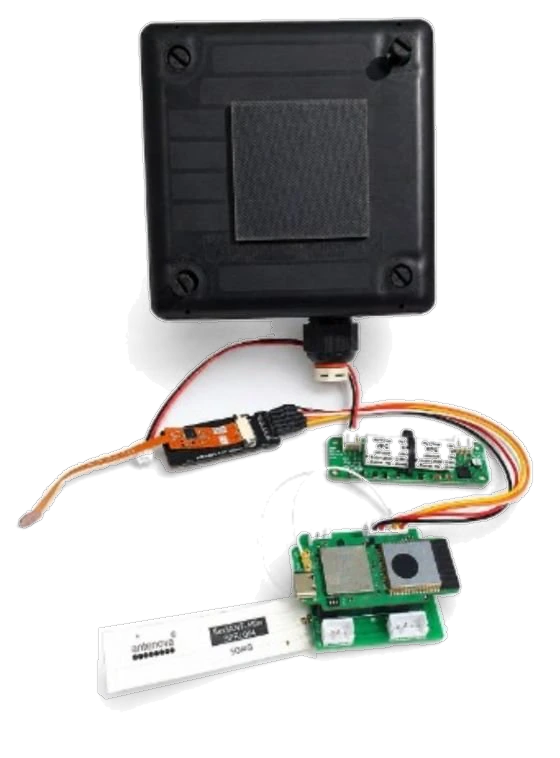
Open GeoInspect sensor enclosure with its circuit boards, cables and sensor module

Harvestcore sensor node

01

Custom sensor nodes

In-house PCB design and embedded firmware, built around the measurement: soil moisture, water level, flow, air quality, sound and more.

02

Power that lasts

Energy harvesting and ultra-low-power design let nodes run off-grid without maintenance visits.

03

Data you can reach

Cellular and long-range links with fallback paths, feeding our own telemetry backend and dashboards, or straight into yours.

One mission, many platforms

The sensor comes first. The mission picks the platform.

We are not tied to one aircraft, sensor or vendor. We choose the deployment that fits the site, the distance and the data you need.

FIXED

Continuous monitoring

Permanently installed nodes for sites that need long-term observation and alerts.

REMOTE

Fully off-grid systems

Sensing, edge processing, power and connectivity combined for locations with no infrastructure at all.

MOBILE

Rapid coverage

Sensors on moving platforms when the task needs mobility or a fast deployment.

AIRBORNE

Sensing from the air

Drones carrying environmental sensors, LiDAR and cameras over large, hazardous or inaccessible areas.

Sound recognition

Sensors that know what they hear.

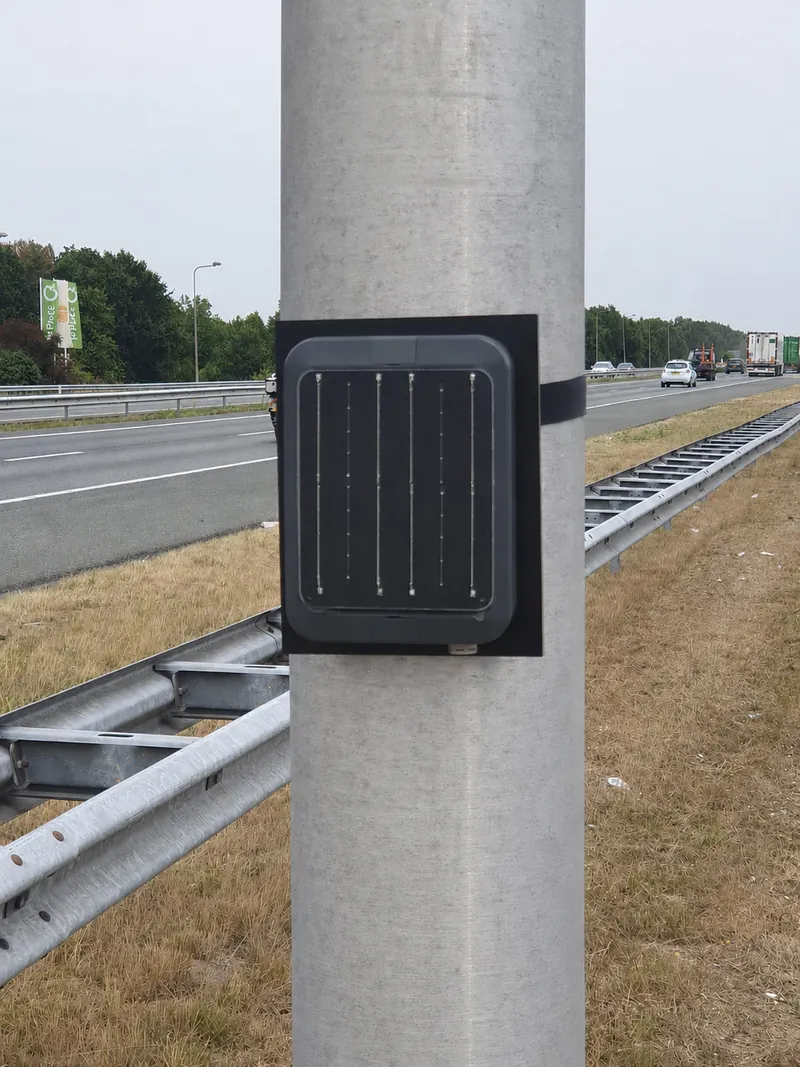
A sound level tells you how loud it is. Recognition tells you what it is. Our acoustic nodes are built to classify sound sources, turning noise data into answers about traffic, disturbance and wildlife. Traffic recognition works today; other sources are in development or planned.

Working

Traffic

Recognises passing cars and separates them from other sound sources, so traffic noise can be measured on its own.

In development

Noise sources

Aircraft, tractors, mopeds and events identified automatically, so policymakers see which sources cause disturbance, how often and when.

Next

Bats

Detecting bats by their ultrasonic echolocation calls, which are inaudible to people, for long-term ecological monitoring without a surveyor on site every night.

Airborne sensing

A drone is a sensor platform that moves.

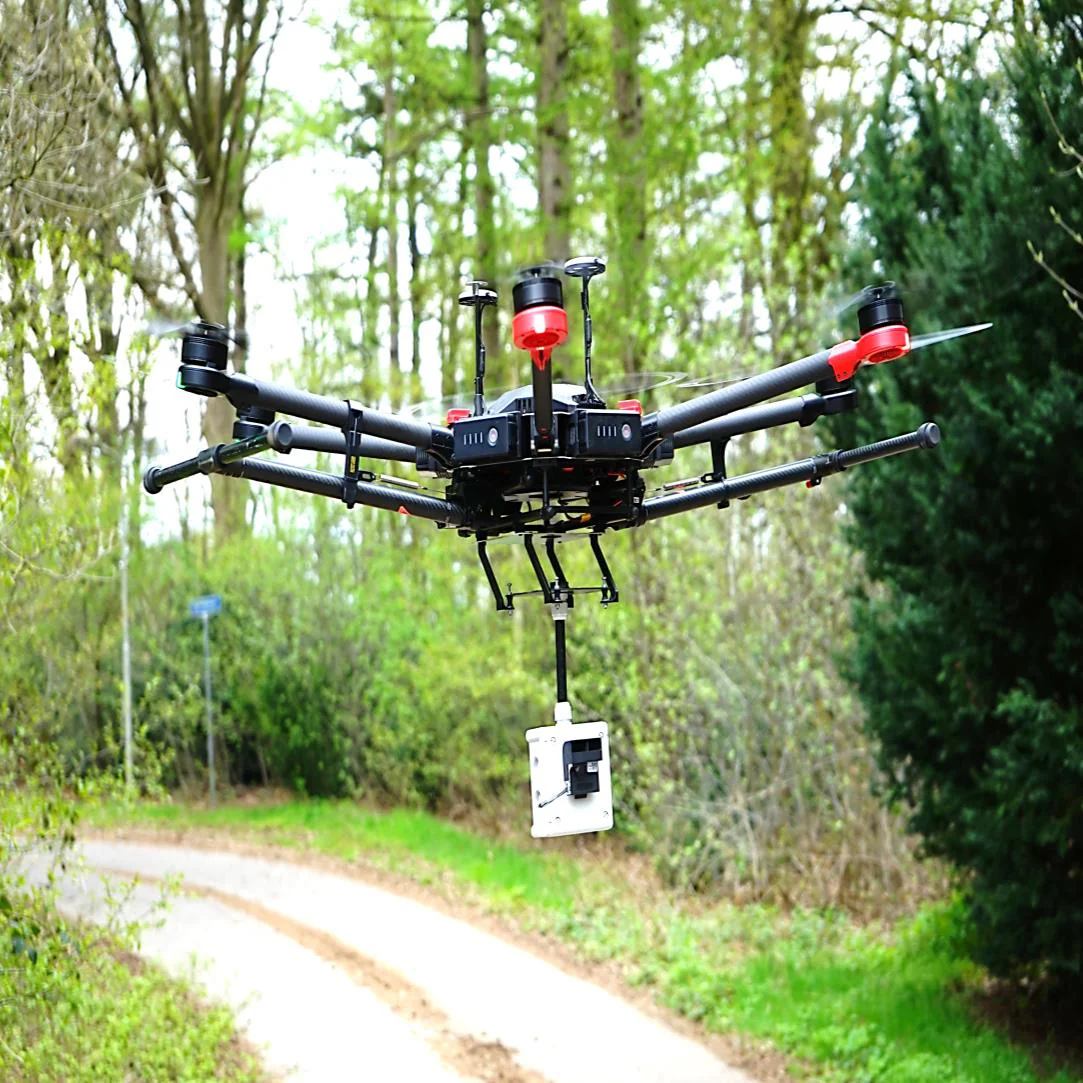
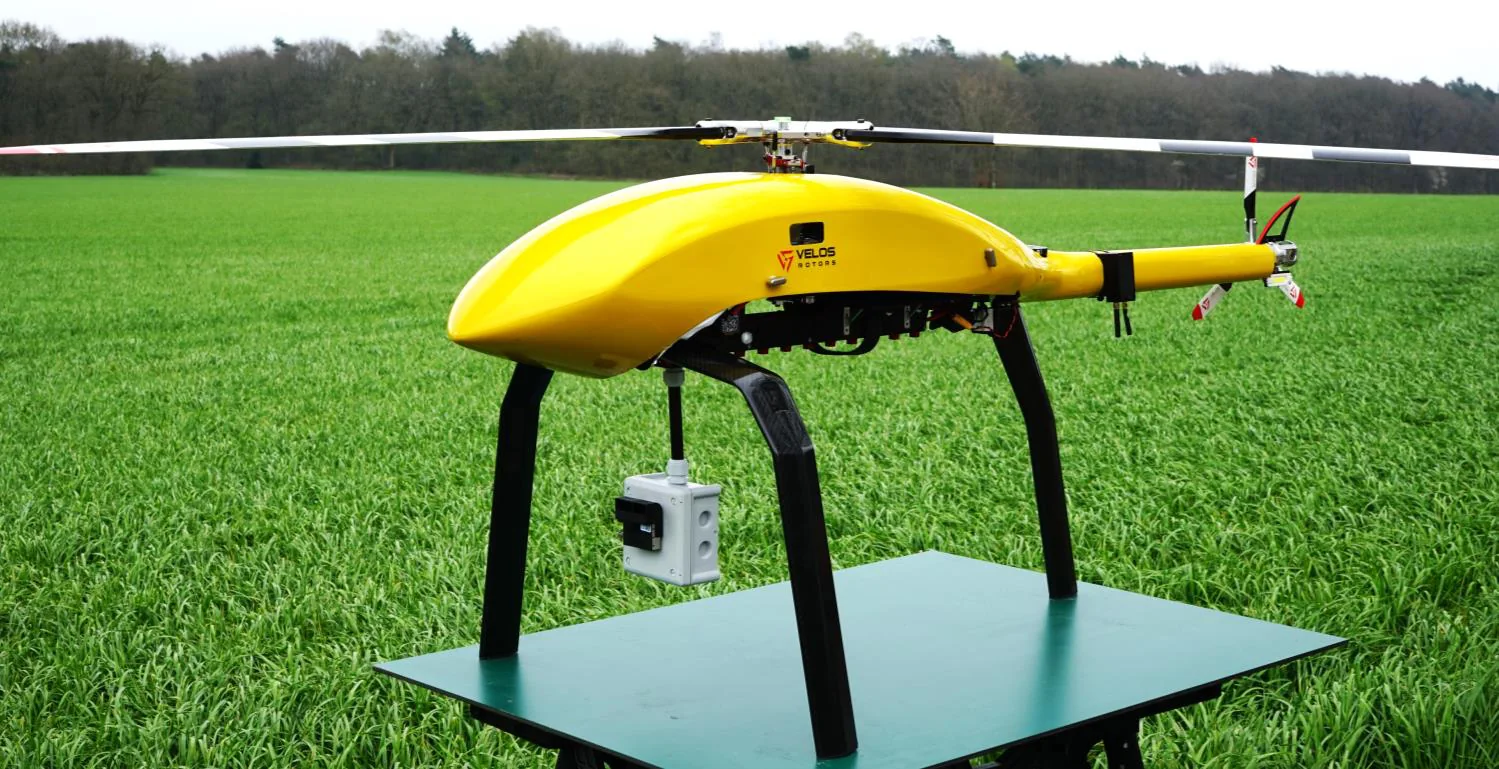
We fly the same sensing approach we use on the ground: choose the measurement first, then carry it to where it’s needed. Drones reach places a fixed node can’t and cover large areas fast. They complement permanent monitoring with surveys on demand.

Quadcopter drone in flight over a woodland path, carrying a white sensor box beneath it
Yellow helicopter-type drone on grass with a sensor payload mounted underneath

Environmental sensing from the air

Gases, particulate matter, VOCs, temperature and humidity measured in flight, for emissions, plumes and air quality where ground stations can’t go.

LiDAR & photogrammetry

Point clouds, 3D models, orthophotos and GIS-ready datasets for terrain, construction, mining and archaeology.

Inspection & repeat monitoring

Imaging and video of power networks, pipelines and structures. Flights are repeated over time to track change without putting people at risk.

Custom payloads & remote operations

Sensor integration on the aircraft, live data links over cellular, and long-range operations where regulations allow.

Our mobile air-quality monitor is a plug-and-play payload measuring particulate matter, VOCs, oxidising gases, humidity and temperature, with GPS location and time stamp.

Projects

Where we are sensing now

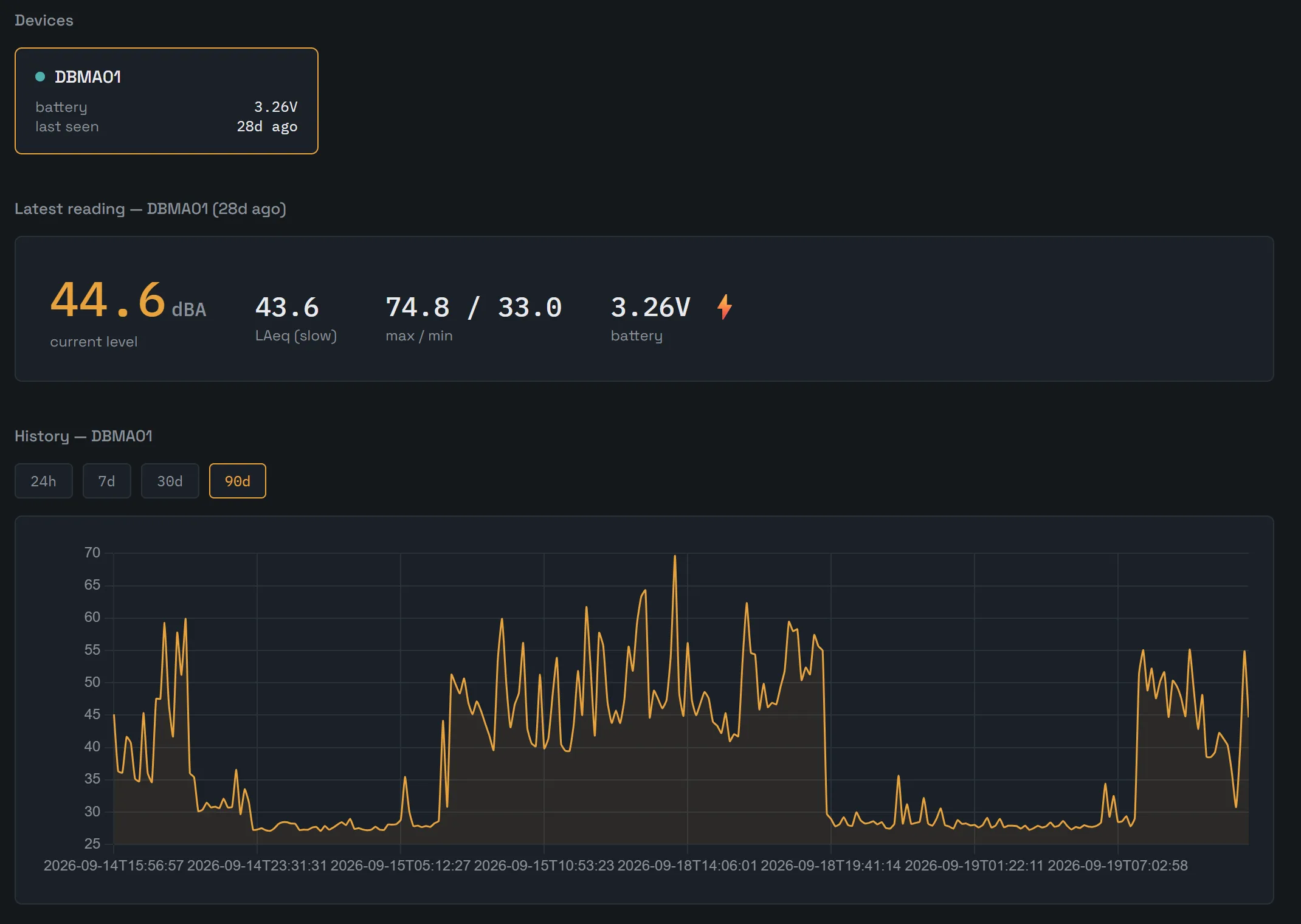
Dashboard of the GeoInspect noise monitor network showing the latest reading and a 90-day sound-level history chart

Dashboard preview

Measurements, in one place

Readings from the noise monitor network, with history over 24 hours, 7, 30 and 90 days.

Snapshot of historical readings. The monitor is entering field deployment.

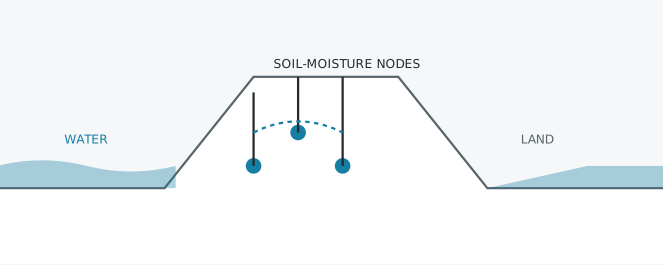
Illustrative diagram of soil-moisture nodes inside a dike between water and land
Illustrative

NETHERLANDS · FIXED

Dike soil-moisture monitoring

Low-power nodes track moisture inside flood defences, giving early warning of weakening sections.

[Result / status]

Illustrative diagram of a solar-powered off-grid node measuring borehole water level
Illustrative

UAE · REMOTE

Off-grid water & irrigation

Soil moisture, borehole water level and leak detection for desert sites with no power or network.

[Result / status]

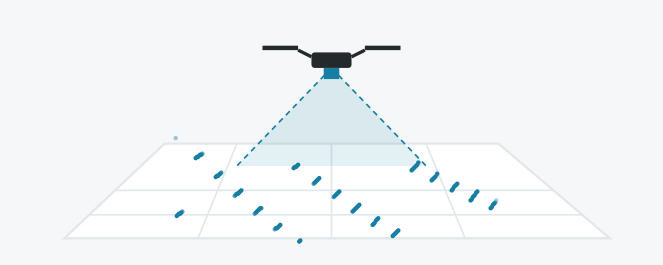
Illustrative diagram of a drone sampling air quality over a mapped area
Illustrative

AIRBORNE

Drone-borne air-quality sensing

A plug-and-play sensor unit flown on a drone, measuring particulate matter, VOCs, oxidising gases, humidity and temperature.

[Result / status]

Applications

Built for the hard‑to‑reach.

Water & agriculture

Soil moisture, water levels, flow and leaks.

Flood defence & civil works

Dikes, embankments and earthworks.

Environmental monitoring

Air quality, gases, noise, weather and wildlife.

Infrastructure inspection

Power networks, pipelines, industrial assets.

Mapping & LiDAR

Construction, mining, archaeology, terrain.

Emergency response

Rapid situational data where access is unsafe.

About · Engineering & consultancy

From proof of concept to field deployment.

Some sensing problems don’t fit an off-the-shelf product. We help you choose the sensors and platform, build a working prototype, and take it into operation. GeoInspect designs and builds its own hardware, with one team responsible from circuit board to dashboard.

GeoInspect Ltd · Ireland · Projects in the Netherlands and the UAE

01

Assess

Define what to measure, where, and how often.

02

Prototype

Select or build sensors, hardware and connectivity, then prove it in a pilot.

03

Deploy

Install in the field and commission the data pipeline.

04

Operate

Monitoring, alerts, maintenance and data delivery.

Tell us what you need to measure.

We’ll work out how to sense it, wherever it is.